
03/09/2026
If you need Same Day Rubbish Clearance South Ruislip Station, you are probably dealing with one...
This Privacy Policy explains how Waste Disposal Ruislip collects, uses, stores and protects personal data relating to our customers and prospective customers. It applies to all individual customers and business contacts who use or enquire about our waste collection and disposal services in the Ruislip area.
Waste Disposal Ruislip is a waste collection and disposal service provider operating in the Ruislip area. For the purposes of applicable data protection laws, including the UK General Data Protection Regulation and the Data Protection Act 2018, Waste Disposal Ruislip is the data controller for the personal data described in this Privacy Policy.
This Privacy Policy applies to all customers and potential customers of Waste Disposal Ruislip in the Ruislip area, including individuals, sole traders, and contacts at business customers. It covers personal data provided through telephone calls, email, online enquiries, written correspondence, and in-person interactions related to our services.
We may collect and process the following categories of personal data:
Identification and contact details such as full name, address, postcode, email address, telephone number and, where relevant, job title and company name.
Service information such as property access details, collection instructions, type and volume of waste, service history, booking dates and times.
Payment and billing information such as billing address, payment status, invoice details and limited payment card details where necessary to process a transaction through our payment provider. We do not store full card numbers after the transaction is completed.
Communication records such as emails, enquiry forms, notes of telephone conversations, complaints, feedback and any other correspondence you have with us.
Technical data such as IP address, device type, and basic usage data where you interact with our online services, to the extent this is necessary for security and service delivery.
We collect personal data directly from you when you contact us to request a quote, make a booking, arrange a collection, pay for services, send an enquiry, or provide feedback. We may also receive your details where another person arranges a collection on your behalf or where a business provides your contact details as their representative.
We only process your personal data where we have a lawful basis under data protection law. Depending on the circumstances, we rely on the following lawful bases:
Contractual necessity: to provide a quote, enter into a contract with you, schedule and carry out collections, manage your account, issue invoices, and provide customer support.
Legal obligations: to comply with legal and regulatory requirements relating to waste disposal, record keeping, taxation and accounting.
Legitimate interests: to manage our business, improve our services, respond to enquiries, prevent fraud, ensure site and network security, and send limited service-related information that is relevant to existing customers. We balance these interests against your rights and freedoms.
Consent: where required by law, for example for certain types of marketing communications. You can withdraw consent at any time using the contact details provided in this Privacy Policy.
We use your personal data for the following purposes:
To provide waste collection and disposal services, including confirming bookings, planning routes, and carrying out collections at your address.
To respond to your enquiries, provide quotations, and give information about our services that you have requested.
To manage our customer relationship with you, including customer service, handling complaints, and updating you about changes to our services or terms.
To process payments, issue invoices, manage debt recovery if required, and maintain accurate financial records.
To comply with legal and regulatory obligations, including waste transfer documentation and record retention requirements.
To maintain the security and integrity of our systems, monitor for fraud or misuse, and protect our business interests.
To conduct internal analysis and service improvement, using aggregated or pseudonymised data where possible.
We may share your personal data with trusted third parties who act as our data processors. These include:
IT and system support providers who host or maintain our booking, communication and record-keeping systems.
Payment service providers who process card or electronic payments securely on our behalf.
Accountants and professional advisers who assist us with our legal and financial obligations.
Waste transfer and disposal partners where necessary to fulfil our contractual and legal responsibilities.
We ensure that all processors only process your data on our instructions, use appropriate security measures, and are bound by written data processing agreements. We do not sell your personal data to third parties.
We may also share data where required by law, for example with regulatory authorities, law enforcement, or in connection with legal proceedings, provided we do so in accordance with data protection laws.
In some cases, our service providers may store or access personal data from locations outside the United Kingdom. Where this occurs, we take steps to ensure that appropriate safeguards are in place, such as using service providers in countries deemed adequate by relevant authorities or implementing standard contractual clauses or equivalent protections.
We keep your personal data only for as long as necessary for the purposes for which it was collected and to meet our legal, accounting and reporting obligations.
Customer and service records are typically retained for up to seven years after the end of our relationship with you, in line with tax and accounting requirements.
Enquiry records are generally retained for up to two years from the date of your last interaction with us, unless they form part of an ongoing customer file.
Where data is no longer required, we will securely delete or anonymise it.
You have a number of rights under data protection laws in relation to your personal data. These include:
Right of access: you can request confirmation of whether we process your personal data and obtain a copy of the data we hold about you.
Right to rectification: you can ask us to correct inaccurate or incomplete personal data.
Right to erasure: in certain circumstances, you can request that we delete your personal data, for example where it is no longer needed for the original purpose and there is no overriding legal reason to retain it.
Right to restriction: you can ask us to restrict the processing of your personal data in specific situations, for example while we address a query about its accuracy.
Right to data portability: in some cases, you can request that we provide your personal data in a structured, commonly used and machine-readable format, or ask us to transfer it to another service provider where technically feasible.
Right to object: you can object to processing that is based on our legitimate interests or for direct marketing. We will stop such processing unless we can demonstrate compelling legitimate grounds or a legal requirement.
Right to withdraw consent: where we rely on your consent, you may withdraw it at any time. This will not affect the lawfulness of processing before consent was withdrawn.
If you wish to exercise any of your data protection rights or have questions about how we handle your personal data, you can contact us using the details provided on our main customer communication channels. We may need to verify your identity before acting on your request. We aim to respond without undue delay and within the time limits set by law.
We take appropriate technical and organisational measures to protect your personal data from unauthorised access, loss, alteration or disclosure. These measures include restricting access to personal data to staff and processors who need it for their duties, using secure systems and taking reasonable steps to ensure that our partners also protect your data.
We may update this Privacy Policy from time to time to reflect changes in our services, legal requirements or data protection practices. The latest version will apply to all Waste Disposal Ruislip customers in the Ruislip area. We encourage you to review this Policy periodically to stay informed about how we handle your personal data.

GET A FREE QUOTE
Quality service from the best experts!
Entrust our waste disposal Ruislip experts in providing you fast and professional help at the lowest possible prices.
 Tipper Van - Rubbish Removal and Commercial Clearance Prices in Ruislip, HA4
| Space іn the van | Loadіng Time | Cubіc Yardѕ | Max Weight | Equivalent to: | Prіce* |
| Minimum Load | 10 min | 1.5 | 100-150 kg | 8 bin bags | £90 |
| 1/4 Load | 20 min | 3.5 | 200-250 kg | 20 bin bags | £160 |
| 1/2 Load | 40 min | 7 | 500-600kg | 40 bin bags | £250 |
| 3/4 Load | 50 min | 10 | 700-800 kg | 60 bin bags | £330 |
| Full Load | 60 min | 14 | 900-1100kg | 80 bin bags | £490 |
*Our rubbish removal prіces are baѕed on the VOLUME and the WEІGHT of the waste for collection.
 Luton Van - Rubbish Removal and Commercial Clearance Prices in Ruislip, HA4
| Space іn the van | Loadіng Time | Cubіc Yardѕ | Max Weight | Equivalent to: | Prіce* |
| Minimum Load | 10 min | 1.5 | 100-150 kg | 8 bin bags | £90 |
| 1/4 Load | 40 min | 7 | 400-500 kg | 40 bin bags | £250 |
| 1/2 Load | 60 min | 12 | 900-1000kg | 80 bin bags | £370 |
| 3/4 Load | 90 min | 18 | 1400-1500 kg | 100 bin bags | £550 |
| Full Load | 120 min | 24 | 1800 - 2000kg | 120 bin bags | £670 |
*Our rubbish removal prіces are baѕed on the VOLUME and the WEІGHT of the waste for collection.
If you need Same Day Rubbish Clearance South Ruislip Station, you are probably dealing with one...
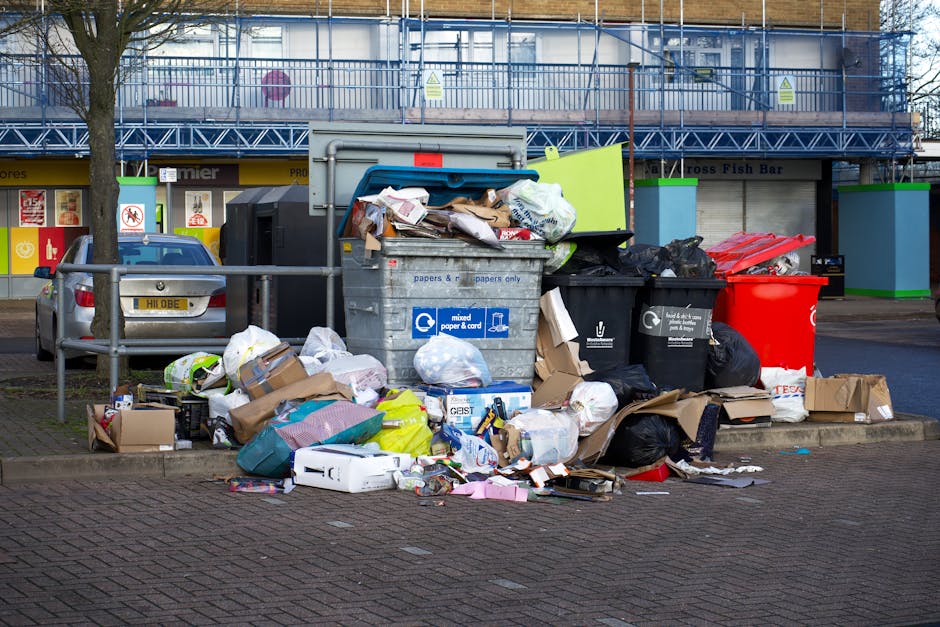
If you are trying to clear out rubbish around Ruislip Lido, the job can look simple on the...
London's Tactics to Abolish Waste In the drive towards sustainability, London stands out as a...

London is a city known for its iconic landmarks, vibrant culture, and bustling lifestyle....

Ruislip is a flourishing suburban area located in the London Borough of Hillingdon.

Ruislip, a suburban area in the London Borough of Hillingdon, offers a variety of stunning venues...

Ruislip, a suburban area in the London Borough of Hillingdon, offers a blend of urban amenities...

Located in the London Borough of Hillingdon, Ruislip is a charming suburban town that offers a...

 (80)
(80)